
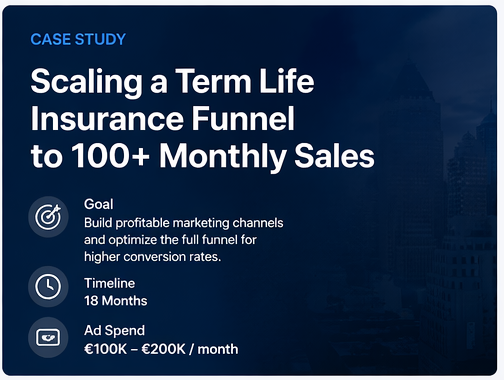
Scaling a High-Complexity Insurance Funnel to 100+ Monthly Sales
Overview
Funnels in the finance and insurance industry are inherently complex. Unlike typical e-commerce journeys, users are required to complete extensive questionnaires—often 20–30+ fields—before receiving a quote or completing a purchase.
This case study outlines how a direct-to-consumer (D2C) term life insurance funnel was built, optimised, and scaled over a period of 18 months. The focus was on establishing performance marketing channels, optimising the full funnel experience, and leveraging data to drive sustainable growth.
Initial Situation
- No established performance marketing engine
- Low conversion volume → insufficient data for algorithmic optimisation
- Long, multi-step questionnaire creating high drop-off risk
- No structured testing or CRO framework in place
Objectives
- Build scalable acquisition channels (primary focus: Google Ads)
- Increase conversion rates across landing page and questionnaire
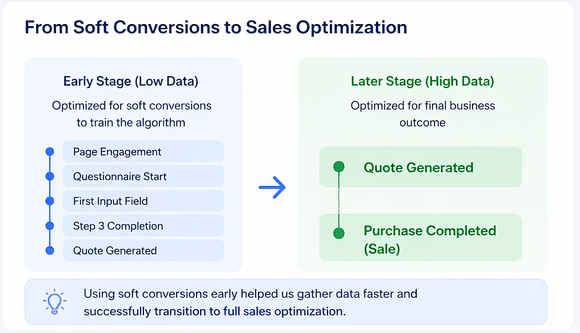
- Generate sufficient data volume to enable algorithmic optimisation
- Transition from proxy conversions to actual sales optimisation
Approach
1. Channel Development (Google Ads Focus)
- Built full-funnel campaign structure (Search, PMax, remarketing)
- Focus on high-intent keywords related to term life insurance
- Continuous restructuring based on query-level performance
2. Funnel Optimisation (Landing Page + Questionnaire)
- Holistic view: campaign → landing page → questionnaire
- Reduced friction in early steps to increase engagement
- Improved clarity, trust elements, and perceived value
Application Conversion Rate over Time in %
3. Conversion Rate Optimisation (CRO Program)
- Implemented structured A/B testing using a CRO tool
- Tested across:
- Landing page layouts
- Headlines and value propositions
- Questionnaire UX (step structure, field order, progress indicators)
- Continuous iteration over 18 months
4. Smart Use of Soft Conversions
- Early phase: optimized for micro-conversions (e.g. step completions, form starts)
- Enabled faster algorithm learning despite low sales volume
- Gradual shift toward deeper funnel events
- Final phase: full optimisation toward completed sales
5. Budget Scaling
- Monthly ad spend: ~€100,000 – €200,000
- Scaling tied strictly to performance thresholds and data quality
Key Challenges
- High drop-off risk due to long questionnaire
- Limited initial conversion data for machine learning optimisation
- Balancing lead quality vs. volume
- Aligning marketing messaging with complex product requirements
Results
- Scaled to 100+ policy sales per month
- Achieved ~5% conversion rate within the questionnaire funnel
- Established Google Ads as a reliable, scalable acquisition channel
- Built a fully test-driven CRO process across the entire funnel
- Successfully transitioned from proxy signals to revenue-based optimisation
Key Learnings
- Full-funnel thinking is critical: Campaign performance cannot be separated from on-site experience
- Soft conversions are essential in low-volume environments: They enable algorithm training before scale
- CRO is a continuous process, not a one-time fix
- Small UX improvements compound significantly in long funnels
- Data quality > volume in early stages; volume enables scaling later
Many performance marketing projects require significant conversion optimisation efforts - optimisations on landing pages and within the onpage funnel matter just as much as great campaigns.
The results we achieved for SwissRe showcase the relevance of Conversion Optimisation skills. Get in touch to learn about how we support our clients onpage results.